9-minute read · Researched with Canadian veterinary, government and animal-welfare sources · Sources listed at the end
Good senior cat care at home is about making everyday things easier to reach: a litter box with a low entry, steps to favourite spots, warm padded beds, water close by and a night light. Pair those changes with vet checks every six months, and you give an older cat the best chance to stay comfortable and independent.
Early November brings darker evenings across Canada and colder floors as the heating season settles in. It's a good week to look at your home from an older cat's point of view. Cats count as seniors once they pass 10, so by 11 your cat is firmly in that group, even if they still act young.
Key takeaways
- The 2021 AAHA/AAFP Feline Life Stage Guidelines consider cats over 10 to be seniors and recommend vet exams about every six months at that stage.
- Arthritis is common and easy to miss: in research cited by Cornell, 90% of cats over 12 showed X-ray evidence of degenerative joint disease.
- A litter box with a low entry is often the most useful single change, because climbing over a high side is hard on stiff joints.
- Steps, ramps and lower cat-tree platforms keep favourite spots within reach without big jumps.
- Weigh your cat regularly and tell your vet about changes in thirst, appetite, litter habits or night-time yowling.
What age is a senior cat?
Under the 2021 AAHA/AAFP Feline Life Stage Guidelines, cats are kittens up to 1 year, young adults from 1 to 6, mature adults from 7 to 10 and seniors after 10. The guidelines recommend increasing wellness exams to every six months for seniors, with extra attention to weight and to conditions such as degenerative joint disease and cognitive dysfunction.
The Cornell Feline Health Center's guide to the special needs of the senior cat notes that many cats begin showing age-related changes between 7 and 10 years old, most by 12, and that a 12-year-old cat is roughly equivalent to a 61-year-old person. Cornell also points out that cats are experts at hiding illness, which is why what you notice at home matters so much.
Signs of arthritis in cats that are easy to miss
Arthritis in cats rarely looks like limping. More often, a cat quietly stops doing things. Cornell's article Is Your Cat Slowing Down? describes a study in which X-rays showed evidence of degenerative joint disease in 90% of cats over 12, and notes that 20% of cats one year and older are already arthritic to some extent. It adds that affected cats may have trouble hopping in and out of the litter box and may avoid stairs.
Cats Protection's advice on keeping cats warm in cold weather includes a section on arthritic cats and lists signs such as grooming less, resting more, hesitating to jump, toileting outside the tray and irritability when handled.
| Sign | What you might notice at home | What to change |
|---|---|---|
| Reluctance to jump | Stops using the windowsill, bed or top of the cat tree; jumps in stages | Add steps or a ramp; book a vet check |
| Litter box changes | Goes just outside the box, or struggles to step in | Switch to a low-entry box; ask your vet to rule out other causes |
| Less grooming | Matted or greasy fur over the back and hips; thick, overgrown claws | Gentle daily brushing; check nails weekly |
| Avoiding stairs | Stays on one floor; hesitates at the top step | Put food, water, litter and a bed on that floor |
| More sleep, less play | Naps longer, picks warm spots, ignores toys | Warm padded beds; short, gentle play at floor level |
| Grumpy when touched | Flinches or swats when stroked along the spine or hips | Ask your vet about pain management options |
9 home changes for senior cat care
You don't need to redo your home. Start with the litter box and the spots your cat uses most, then work down the list.
1. Switch to a low-entry senior cat litter box
The FelineVMA's house-soiling handout for cat caregivers says older cats need a low entry and suggests cutting down one side of the box, checking for sharp edges. A large, shallow storage bin with one side cut low works well. The handout also recommends a box about 1.5 times your cat's length and, in a multi-level home, a box on each level. If accidents have started, read why cats pee outside the litter box and book a vet visit.
2. Add steps or a ramp to favourite spots
Cats Protection suggests steps up to resting places such as beds and sofas so cats don't have to jump. Ramps suit cats with very stiff hips; steps suit cats who still like to climb in stages. Put them where your cat already wants to go.
3. Choose a lower cat tree for senior cats
A cat who once claimed the top of a tall tower may now stop halfway. A shorter tree with wide, padded platforms and small gaps between levels keeps a lookout within reach. Set it beside a window so the view stays part of the day.
4. Put warm, padded beds in draught-free spots
Cornell notes that arthritic cats often seek warm, comfortable napping spots, and Cats Protection recommends plenty of comfortable, well-padded beds in safe, warm places. Keep beds away from cold floors by exterior doors, and choose sides low enough to step over.

Water, food, grooming and night-time changes
5. Set up water stations on every floor
Increased thirst is one of the warning signs Cornell lists for senior cats, so place water where you'll notice how much disappears. Put a bowl or fountain on each floor your cat uses. Our guide to cat water fountains covers how to tempt a reluctant drinker.
6. Keep food easy to reach
Cats Protection advises keeping food and water bowls easy to reach. Move them off counters and window ledges, and if your cat eats on one floor but sleeps on another, add a second feeding spot.
7. Help with grooming and nail care
Older cats often groom less, and overgrown claws can catch on carpet. Cornell recommends checking nails weekly, trimming overgrown ones and brushing daily. Keep sessions short and gentle, and stop before your cat gets annoyed.
8. Add night lights and keep the layout predictable
Cornell's page on cognitive dysfunction in cats lists disorientation, changed sleep cycles, loud vocalizing in the middle of the night and accidents outside the litter box among the signs seen in cats 10 and older. A few plug-in night lights along the route to litter and water make night-time trips easier. Cornell also advises keeping household stress low, so avoid rearranging furniture.
9. Track weight and keep six-month vet visits
The AAHA/AAFP guidelines ask vets to watch senior cats for weight loss or gain. Weigh your cat once a month: step on the scale holding your cat, then subtract your own weight. Bring the log to each exam, with notes on appetite, thirst and litter habits. For the everyday checks that catch problems early, see our daily cat routine.
When to call your vet
- Your cat is drinking or urinating more, or losing weight.
- Eating less, vomiting or having trouble eating.
- Litter box accidents, straining or changes in urine or stool.
- A new limp, a change in how your cat walks, or crying when picked up.
- Night-time yowling, confusion or getting stuck in corners.
- Any difficulty breathing: call right away.
Elderly cat care tips for a Canadian winter
Cold weather and short days add a few extra jobs for older cats:
- Block floor-level draughts near patio doors and windows where your cat naps.
- Keep at least one bed near a heat source, but never directly against a baseboard heater or space heater.
- If your senior cat still goes outdoors, keep trips short and stay close; Cats Protection lists elderly cats among those most at risk in the cold.
- Keep playing. Short, gentle wand-toy sessions at floor level keep joints moving and the mind busy.
- Plan vet visits around the weather: warm the car first and line the carrier with a towel.
Our picks for senior cats from Petcarestore.ca
These pieces from our catalogue line up with the changes above. Measure the height of the bed, couch or sill you want to reach before you choose steps or a ramp.
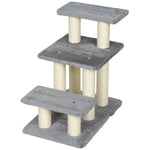
- Cat Stairs with 2 Sisal Scratching Posts for High Bed or Couch, Adjustable 3-Tier: Three adjustable steps up to a bed or couch, with sisal posts built in so the stairs double as a scratching spot. A good first fix for a cat who has stopped jumping onto the bed.
- Pet Ramp Bed Steps for Dogs and Cats, Non-Slip Carpet Top, Pine Wood: A pine ramp with a non-slip carpeted surface and a top platform. At 150 cm (59 in) long, it suits cats who find even steps uncomfortable.
- 17" Cat Tree, Kitty Activity Centre with Hanging Toys: At 43 cm (17 in), this low tree keeps a perch within easy reach of an older cat, with hanging toys for gentle play.
- Rattan Dog Bed with Waterproof Soft Cushion for Small Dogs and Cats: A rattan bed with a soft, waterproof cushion, which is handy if your senior cat has the occasional accident.
- GIOTOHUN 2L Cat Water Fountain: A 2-litre fountain with a multi-stage filter and quiet operation, useful as a second water station on another floor.
Find more options in our pet stairs and ramps collection, lower models among our cat trees and towers, and everyday basics in cat supplies.
Frequently asked questions
At what age is a cat considered senior?
Under the 2021 AAHA/AAFP Feline Life Stage Guidelines, cats are seniors once they are older than 10. Cornell notes many cats start showing age-related changes between 7 and 10, and most show them by 12. Plenty of older indoor cats still look youthful, so plan their care by age and behaviour rather than appearance.
What are the signs of arthritis in cats?
Look for a cat who stops jumping onto favourite spots, avoids stairs, struggles to get into the litter box, grooms less or becomes irritable when touched. Many arthritic cats also sleep more and seek out warm spots, while obvious limping is less common. If you notice these changes, book a vet visit to talk about pain management options.
What kind of litter box is best for a senior cat?
Choose a large box with at least one low side so your cat can walk in rather than climb over. FelineVMA suggests a box about 1.5 times your cat's length and cutting down one side for older cats, smoothing any sharp edges. Place a box on every level of the home, close to where your cat spends time.
How often should a senior cat see the vet?
About every six months. The 2021 AAHA/AAFP guidelines recommend increasing wellness exams to twice a year for senior cats, with attention to weight changes, joint disease and cognitive changes. Cats hide illness well, so between visits keep simple notes on weight, appetite, thirst and litter habits, and bring them to each appointment.
Why does my old cat yowl at night?
Night-time yowling can be a sign of cognitive dysfunction, which Cornell describes in cats 10 and older alongside disorientation, changed sleep patterns and litter box accidents. Other health problems can cause similar changes, so start with a vet visit. At home, night lights, a steady routine and easy access to litter and water can help.
Sources and further reading
- AAHA — 2021 AAHA/AAFP Feline Life Stage Guidelines
- Cornell Feline Health Center — Is Your Cat Slowing Down?
- Cornell Feline Health Center — The Special Needs of the Senior Cat
- Cornell Feline Health Center — Cognitive Dysfunction
- FelineVMA — Feline House-soiling: Useful Information for Cat Caregivers (PDF)
- Cats Protection — Keeping cats warm and preventing hypothermia
About this guide
Researched and written by the Pet Care Store Canada Team for pet owners across Canada. We build each guide from veterinary, government and animal-welfare sources (listed above) and update it when guidance changes.
This article is general information, not veterinary advice. If your pet seems unwell or you think they ate something harmful, contact your veterinarian or an emergency animal clinic right away.
Shopping with us: prices in CAD, no customs or duty fees at checkout, delivery in 3–10 business days, and free shipping on most orders over $100. See our shipping policy and returns policy, or contact us with questions.