9-minute read · Researched with Canadian veterinary, government and animal-welfare sources · Sources listed at the end
To get your cat to use a cat tree, make the tree feel safe and worth the climb. Move it beside a window or into the room where your family spends time, remove any wobble, add your cat's own scent, and make the tree the place where play and treats happen. Never lift your cat onto it.
Mid-October brings shorter days and closed windows across Canada, so your cat is about to spend a lot more time indoors. If the tree you bought is still being ignored, or has become an expensive coat rack, there is usually a reason you can fix. Here's how to find it and win your cat over.
Key takeaways
- Check placement first: cats want a view and company, so move the tree beside a window or into a room your family uses, not a spare room.
- A tree that wobbles feels unsafe. Tighten every bolt and anchor tall trees to a wall stud before you start training.
- Rub a soft cloth on your cat's cheeks and wipe it over the tree; the AAFP/ISFM guidelines recommend this scent transfer for new items.
- Lure with wand toys and treats, starting on the lowest level, and never lift your cat up or force its paws onto the posts.
- If catnip does nothing, try silver vine: in a 2017 study, 79% of cats responded to silver vine compared with 68% to catnip.
Why won't my cat use the cat tree?
Cats are choosy about where they rest and climb. When a cat won't use a cat tree, the cause is usually one of these:
- Wrong location. A tree in a spare room or basement corner offers nothing to watch and no one to be near.
- Wobble. If a platform shifted under your cat once, it may now treat the whole tree as unsafe.
- Unfamiliar smell. A new tree smells of packaging, not of home, and cats judge their territory largely by scent.
- Wrong size or shape. Perches too small for a big cat, levels too far apart for a senior, or no enclosed spot for a shy cat.
- Competition. In multi-cat homes, one cat may guard the tree, especially if there's only one way up.
- Pain. A cat that used to climb and suddenly stops may be sore, not bored.
Watch your cat for a day or two before changing anything. Where does it already nap, perch and scratch? Those spots show what it wants from the tree. Our guide to cat body language signs can help you tell whether your cat is curious, cautious or worried when it approaches.
Where to put a cat tree: placement that works
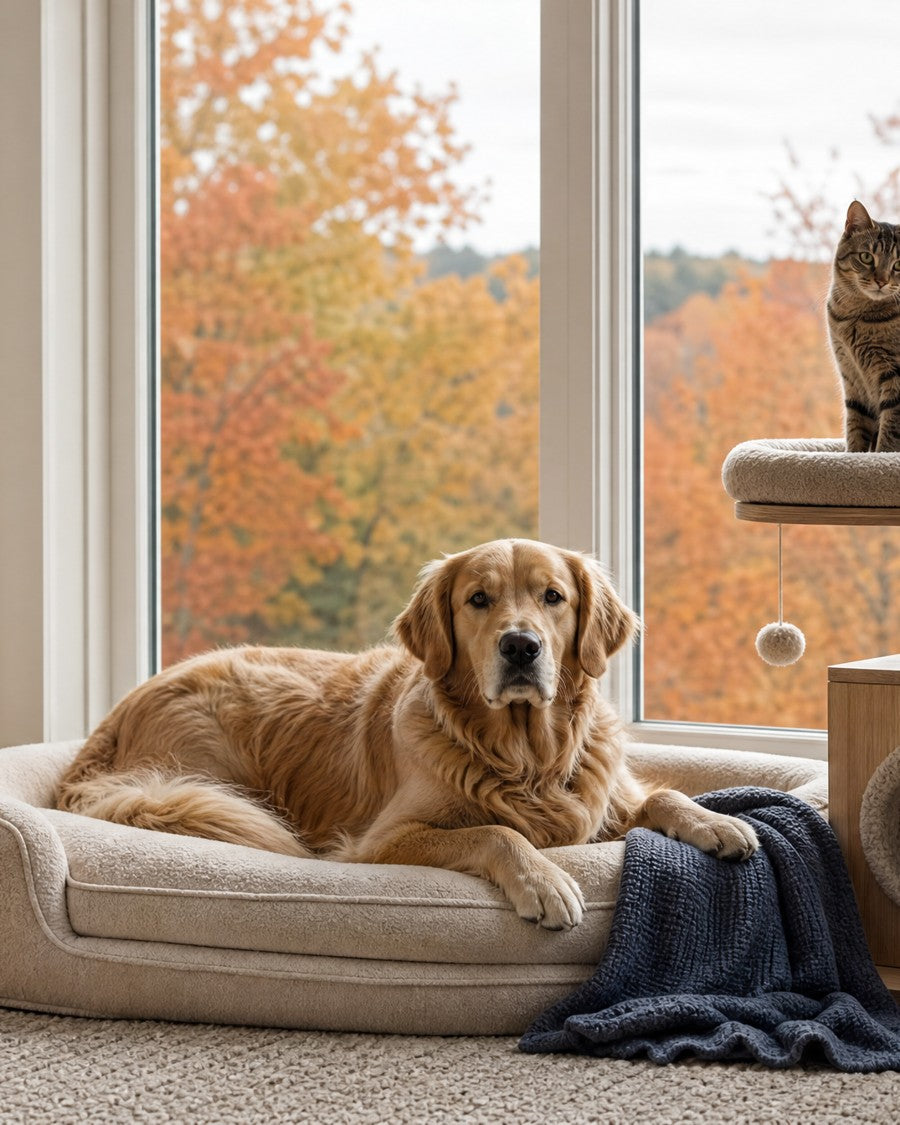
Start with location. Ohio State University's Indoor Pet Initiative calls a perch "a must have for cats" and suggests perches where cats can look outside, while the BC SPCA recommends a scratching post with high perches near doorways or a window. International Cat Care adds that cats often scratch after sleeping, so a post near a favourite bed gets used.
| Spot | How it works for your cat | Tip |
|---|---|---|
| Beside a window | Birds, squirrels and passing traffic give the tree a purpose | On cold winter days, add a fleece pad to the perch nearest the glass |
| Living room or family room | Cats like to rest near their people without being on a lap | Keep it against a wall, out of the main walkway |
| Near a favourite nap spot | Your cat already feels safe there and often scratches on waking | Move the tree later, a little each day, if you need to |
| Doorway into a busy room | A lookout over comings and goings | Make sure it doesn't block the door swing |
| Spare room or basement | Isolated, with little to watch and no company | Best kept for a second tree |
| Beside a furnace, dryer or washer | Sudden noise can startle a cat mid-climb | Choose a quieter wall |
In a multi-cat home, choose a spot cats can approach from more than one side, so no cat can trap another on the top perch.
How to get your cat to use a cat tree: a one-week plan
- Day 1: Make it rock-solid. Re-tighten every bolt, check the base sits level, and anchor a tall tree to a wall stud with an anti-tip strap. Push the top platform firmly; if it moves for you, it moves for your cat.
- Day 1: Add your cat's scent. The AAFP/ISFM feline environmental needs guidelines recommend exposing new items to a cat's scent by rubbing them with a cloth that has touched the cat's scent glands. Gently stroke your cat's cheeks with a soft cloth, then wipe it over the perches and posts. Lay a blanket your cat already sleeps on over one platform.
- Days 2 to 4: Play at the base. Drag a wand toy around the lowest level, then up the posts, like prey escaping upward. Keep sessions short and let your cat catch the toy at the end.
- Days 2 to 5: Use food. Leave a few treats on the lowest platform, then the next one up. A puzzle feeder on a wide platform turns part of a meal into a reason to climb; our list of 12 cheap indoor cat enrichment activities has more ideas.
- Days 3 to 7: Try catnip or silver vine. Rub a pinch into the sisal or a perch cushion (see the next section for which to pick).
- Every day: Reward any interest. Cornell's Feline Health Center recommends rewarding scratching-post use with treats, strokes and praise, and the same works for sniffing, sitting on or climbing the tree.
- Never force it. International Cat Care warns against forcing your cat's paws onto a scratcher, which can cause fear and even injury. The same goes for lifting your cat onto a high perch.
Some cats are on the top perch by the end of the first evening. Cautious cats, rescues and seniors may need several weeks. Keep the routine going and let your cat set the pace.

Does catnip on a cat tree help?
It can, if your cat responds to it, and not every cat does. A 2017 study in BMC Veterinary Research tested domestic cats with four plants. It found that 68% responded to catnip, 79% to silver vine, 53% to Tatarian honeysuckle and 47% to valerian root. Almost 75% of the cats that ignored catnip did respond to silver vine.
- Rub dried catnip or silver vine powder into the sisal, where it stays put, rather than sprinkling it on a platform.
- Refresh it every few days during the first week, then save it for occasional use so it stays special.
- If your cat gets over-excited and starts swatting or biting, switch to calmer lures such as food.
What if your cat is scared of the cat tree?
A worried cat moves in low, with a tucked tail and ears turned sideways or back, stretches its neck to sniff, then retreats. If that's what you see, slow everything down:
- Tie up or remove dangling toys for now; swinging parts can startle a cautious cat.
- Sit near the tree and ignore it yourself, reading or watching TV, so the area feels normal.
- Scatter treats at the base only, and let your cat choose when to step up.
- Tighten anything that creaks or rattles. Noise from the tree itself can be the problem.
- If another pet guards the area, give the nervous cat private sessions with the tree behind a closed door.
When it's the wrong tree, not the wrong cat
Sometimes the tree simply doesn't match the cat. Big cats need perches they can stretch out on; our guide to the best cat trees for large cats and Maine Coons explains how to measure. Shy cats want an enclosed spot partway up. Watchers want an open top perch with a view. Cats that scratch the sofa but ignore the tree often need taller, sturdier posts: International Cat Care advises posts as tall as your cat at full stretch. In a small apartment, see our cat tree buying guide for small Canadian apartments.
Older cats are a special case. International Cat Care lists reluctance, hesitance or refusal to jump up or down among the signs of arthritis, and recommends steps or ramps to help cats reach high places. A low tree with wide, padded platforms often suits a senior better than a tall tower.
When to call your vet
- Your cat used to climb and has suddenly stopped, or now jumps down only from the lowest levels.
- You notice limping, stiffness after rest, or hesitation before jumping.
- Your cat is hiding more than usual, grooming less or eating less.
- A fall from the tree is followed by soreness, limping or lethargy.
Our picks for hesitant climbers
If your cat's current tree is the wrong fit, these designs from our catalogue suit cautious or picky cats. Check each listing's dimensions before ordering.
- Small Cat Tree with Large Padded Plush Perch: a low tree with a large padded perch, an easy first step for nervous cats, kittens and seniors.
- Cat Tree with Perch and Hanging Ball: the hanging ball gives you a built-in play target right beside the perch.
- Multi-Level Cat Tree with Condo, Hammock and Rotatable Hanging Balls: a condo for hiders and a hammock for loungers, so you can see which your cat prefers.
- Cat Tree Kitty Tower with Sisal Mat Scratching Post, Cat Bed and Perch: combines a sisal scratching surface with a bed and perch, for cats that scratch first and climb later.
- 2-Tier Modern Cat Tree with Rotatable Sisal Scratching Ball: a compact two-level design that fits beside a window or sofa.
For more shapes and heights, browse our cat trees and towers collection or shop all cat supplies.
Frequently asked questions
How long does it take a cat to start using a cat tree?
It varies widely. Confident young cats may climb within minutes, while cautious cats, rescues and seniors can take several weeks. Speed things up by placing the tree near a window or where your family spends time, removing any wobble, adding your cat's scent with a cloth, and rewarding every visit with treats or play. Never lift your cat onto the tree.
Should I put catnip on a new cat tree?
Try it, but don't rely on it. In a 2017 study, 68% of cats responded to catnip and 79% to silver vine, and almost 75% of catnip non-responders reacted to silver vine. Rub a small amount into the sisal or a cushion, refresh it during the first week, then keep it as an occasional treat.
Where is the best place to put a cat tree?
Beside a window with something to watch, or in the room where people spend the most time. Cats like a lookout and company. Avoid spare rooms, basements and spots next to noisy appliances. Place the tree against a wall for stability, out of the main walkway, and in multi-cat homes make sure cats can approach it from more than one side.
Why does my cat sleep on the cat tree but scratch the couch?
The posts may not suit how your cat likes to scratch. International Cat Care advises posts as tall as your cat at full stretch and stable enough not to move. Your cat may also prefer a horizontal surface or a different texture. Put a tall, heavy post or a horizontal scratcher right beside the couch and reward your cat every time it uses it.
My cat used the tree for months and then stopped. Why?
Look for a change: a loose bolt or new wobble, a new location, a new pet guarding it, or worn perches. If nothing has changed, consider pain. International Cat Care lists reluctance or refusal to jump up or down as a sign of arthritis. A sudden stop in climbing is worth a vet visit, especially in middle-aged and older cats.
Sources and further reading
- Ohio State University Indoor Pet Initiative — Perches
- BC SPCA — Cat care
- AAFP and ISFM — Feline Environmental Needs Guidelines (2013), hosted by the CVMA
- International Cat Care — Scratching on furniture and carpets
- BMC Veterinary Research (2017) — Responsiveness of cats to silver vine, Tatarian honeysuckle, valerian and catnip
- International Cat Care — Arthritis in cats
- Cornell Feline Health Center — Feline behavior problems: destructive behavior
About this guide
Researched and written by the Pet Care Store Canada Team for pet owners across Canada. We build each guide from veterinary, government and animal-welfare sources (listed above) and update it when guidance changes.
This article is general information, not veterinary advice. If your pet seems unwell or you think they ate something harmful, contact your veterinarian or an emergency animal clinic right away.
Shopping with us: prices in CAD, no customs or duty fees at checkout, delivery in 3–10 business days, and free shipping on most orders over $100. See our shipping policy and returns policy, or contact us with questions.